
How silence and dismissal shape a child’s inner world
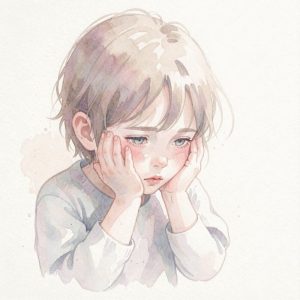
Children don’t think, “My parent is overwhelmed,” or “They didn’t know what to say.” They think something much simpler.
Something is wrong with me.
When a child tries to share something painful — fear, sadness, anger, confusion — they are doing something very brave.
They are reaching outward with something that matters.
And what happens next shapes everything.
Sometimes the response is subtle.
“It’s not that bad.”
“You’re overreacting.”
“Just forget about it.”
“Other children have it worse.”
Or there is no response at all. The subject is changed. The moment passes. Nothing is revisited.
To an adult, these can seem small.
To a child, they are not.
Because the child is not measuring the words. They are feeling what the moment means.
And the meaning becomes: My feelings are not safe here.
At first, the child may try again.
They might explain it differently. Soften it. Say less.Wait for a better moment.
But if the same response comes back — dismissal, discomfort, or silence — something begins to shift.
They stop bringing their feelings. Not because they don’t have them. But because they have learned it is safer to keep them inside.
Over time, this becomes a quiet pattern. The child starts to turn away from their own inner world. They begin to question what they feel.
Minimise it.
Push it down.
Not consciously. Just… automatically.
And slowly, a belief takes shape:
My feelings don’t matter.
This is how the wound begins. Not always through what was done. But through what was not met.
Many parents love their children deeply and still don’t know how to respond in these moments. Not because they don’t care.
But because no one ever showed them how to sit with feelings — their own or anyone else’s.
This is not about blame. It is about understanding how these patterns form.
Because once we can see it clearly, something changes.
We can begin to notice the places where we learned to go quiet.
The moments we turned away from ourselves. The parts of us that are still waiting to be heard.
And gently, without force, we can begin to turn back toward them.